

Last updated October 31, 2026
 House lockouts
 Re-keying
 Deadbolt upgrades
 Smart locks
 Schlage
 Kwikset
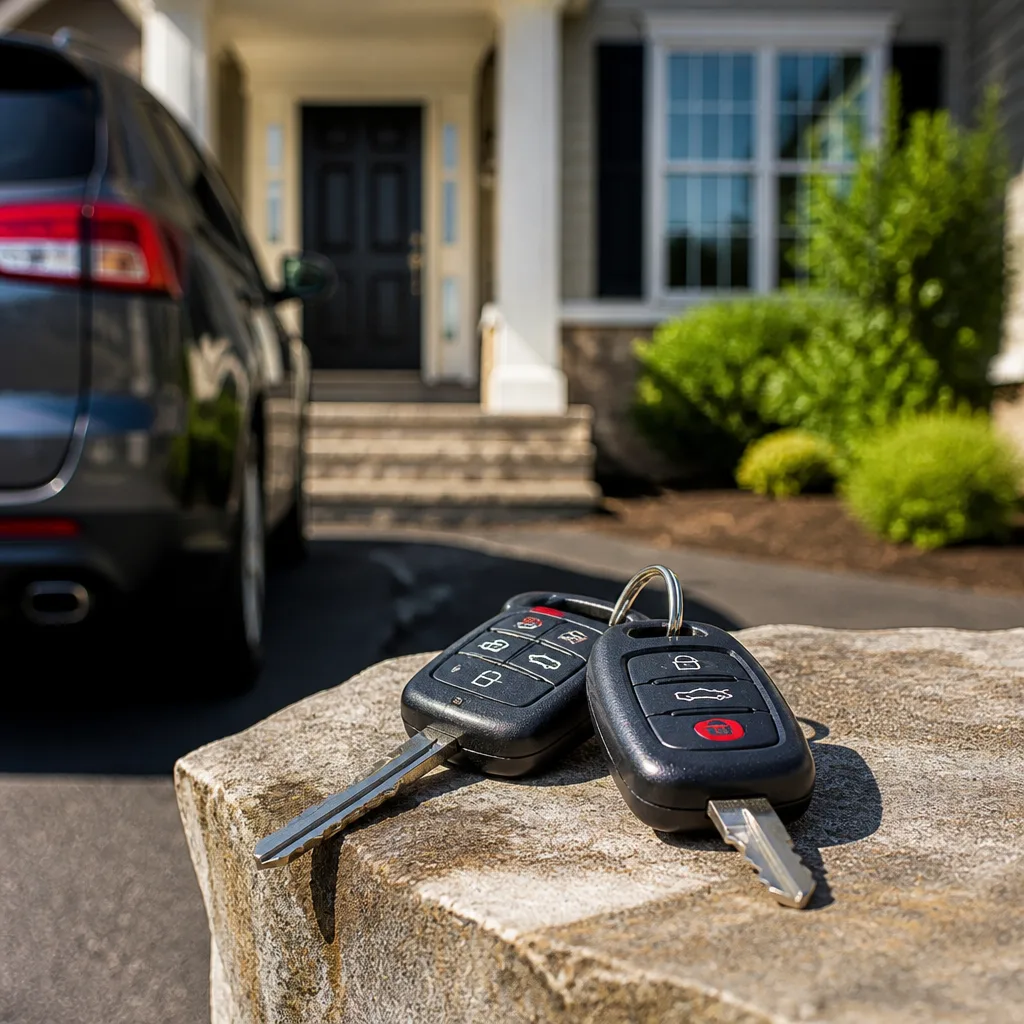 Car keys & fobs
Non-destructive entry first, always - and we re-key Schlage, Kwikset, and Baldwin locks on the spot while you watch
You get a price before we start. It does not change when we arrive. No surprises.
Get your free estimateCar Key Replacement Troubleshooting: Common Problems and How to Fix Them
Here’s a statistic that surprises most Portland drivers: when a newly cut car key fails, the blade is only the culprit about 15% of the time. The other 85% comes down to programming, transponder chips, or the vehicle’s own security system. That’s the frustrating reality of modern car keys. They’re no longer just pieces of metal. They’re miniature computers that happen to turn a cylinder. In this guide, we’ll walk through the full failure chain so you can figure out exactly what went wrong – and whether you need a fresh battery, a different blank, a locksmith diagnostic, or Car Key Replacement services from a professional. If you’ve ever held a brand-new key that won’t start your car, this is for you.
Quick Answer
If your replacement car key isn’t working, the problem is almost always a transponder chip that never got programmed – or lost its programming – rather than a miscut blade. Start by testing whether the key physically turns the ignition and door locks. If it turns but won’t start the engine, you have a programming issue. If it won’t even turn or fit, you have a cutting or blank quality problem. Either way, a locksmith with a diagnostic reader can usually pinpoint the fault on-site in Portland without the dealership markup.
Styles & brands we work with
Table of Contents
- How to Tell a Cutting Error From a Programming Error
- The Dead-Battery-in-Fob vs. Unprogrammed-Transponder Test
- Why Proximity Keys Need Two Working Keys (and What to Do When You’ve Lost Both)
- Cheap Online Blanks: Why They Fail Even After Correct Programming
- When It’s the Car’s Immobilizer Module, Not the Key
- Portland-Specific Factors That Affect Car Key Replacement
- When to Call a Professional
- Frequently Asked Questions
How to Tell a Cutting Error From a Programming Error
Car key problems split into two families: mechanical failures and electronic failures. Knowing which one you’re dealing with saves you time, money, and the frustration of replacing the wrong thing. A cutting error means the physical metal blade doesn’t match your ignition or door lock. A programming error means the blade is fine but the vehicle’s immobilizer doesn’t recognize the key’s transponder chip.
Here’s the test. Insert the key into the driver’s door lock and try to turn it. Then try the ignition. If the key won’t go in at all, or goes in but won’t turn, you’re looking at a cutting problem. The blank may be the wrong profile, the cuts are off by fractions of a millimeter, or the key was cut from a worn original that no longer matches the actual tumblers. In Portland, we see this often with older vehicles whose original keys have worn down over years of wet, gritty use. The key you hand to us is a template, and if that template is worn, the copy inherits the wear.
If the key turns the lock and the ignition but the engine cranks and then dies – or never cranks at all, but all dashboard lights come on – that’s a programming issue. The transponder chip inside the key either was never synced to your vehicle’s immobilizer, or the sync was lost. Recutting the blade won’t fix this. You need the key programmed. If a key turns everything but won’t start the car, skip the key-cutter and go straight to someone with an automotive diagnostic tool.
Signs of a Cutting Error
- Key won’t insert into the ignition or door lock
- Key inserts but won’t turn in either
- Key turns the door but not the ignition (rare, but happens with worn ignitions)
- The key works in one door but not another
Signs of a Programming Error
- Key turns everything, but engine cranks and dies immediately
- Key turns, dashboard lights up, but nothing happens when you turn to start
- Security light on the dash flashes or stays solid when you try to start
- The key worked once or twice, then stopped working
Our experience across hundreds of car key replacements in Dundee and throughout Portland is that programming errors outnumber cutting errors by a wide margin. If the key physically turns, the blade is almost certainly fine. Focus on the chip.
The Dead-Battery-in-Fob vs. Unprogrammed-Transponder Test
Here’s a test you can run before calling anyone. If your key has buttons – lock, unlock, panic – press them while standing next to the car. Do the doors respond? If yes, the fob’s battery is fine and the fob is communicating with the car’s receiver. If the doors don’t respond, replace the fob battery first. A dead fob battery can mimic an unprogrammed key, especially in push-to-start vehicles.
Now here’s the part most people get wrong. A key fob with a working battery that locks and unlocks the doors but won’t start the engine doesn’t have a battery problem. It has a transponder problem. The lock/unlock function runs on one circuit. The immobilizer transponder runs on a separate, passive chip that doesn’t need battery power at all. The two systems are independent. A key can unlock your doors perfectly and still fail to start the car because the transponder was never programmed, was programmed incorrectly, or has failed.
The 60-Second Diagnostic Sequence
- Step 1: Press the lock button on your fob. Doors respond? Yes – battery is fine, move to step 3. No – replace the fob battery (typically a CR2032 or CR2025) and test again.
- Step 2: If a new battery doesn’t restore function, the fob’s circuit board may be damaged. But first, check the battery orientation – we’ve seen plenty of keys where the battery was installed upside down.
- Step 3: If the fob locks/unlocks but the car won’t start, test the physical key blade. Does it turn the ignition? If yes, the vehicle recognizes the key mechanically but the immobilizer is rejecting it – that’s a programming issue.
- Step 4: If you have a push-to-start car and the fob isn’t detected at all – the dashboard says “key not found” – hold the fob directly against the start button. Most vehicles have a backup transponder reader built into the button or steering column that works even with a dead fob battery.
- Step 5: If the backup position doesn’t work either, the fob has lost its programming or the vehicle’s receiver antenna has failed. That’s a diagnostic job, not a battery swap.
In Portland’s damp winters, we see an uptick in fob failures caused by moisture ingress. Keys kept in jacket pockets during rainy commutes absorb humidity over time. The fix is often as simple as opening the fob, cleaning the contact points with isopropyl alcohol, and reassembling. If that sounds like something you’d rather not do to a $200 key, we handle it daily.
Why Proximity Keys Need Two Working Keys (and What to Do When You’ve Lost Both)
Proximity keys – the ones that let you push a button to start the car without inserting anything – are the most misdiagnosed key type on the road. They don’t just contain a passive transponder. They actively broadcast a rolling-code signal that the car must authenticate every time you start it. And here’s the problem: many vehicles require two already-programmed keys to be present when adding a third.
Why? The vehicle’s security system uses the two existing keys as a form of master authentication. If both are present, the onboard computer knows the request is legitimate and allows a new key to be enrolled. If you only have one working key – or none at all – the vehicle assumes the enrollment attempt could be unauthorized and blocks it. This is a theft deterrent. It’s also infuriating when you’ve lost one key and want to make a spare before losing the other.
What happens if you’ve lost both keys? You have four options, in order of cost and complexity:
- On-site programming with a diagnostic tool: A locksmith with an automotive programmer can often bypass the two-key requirement by connecting directly to the vehicle’s OBD-II port and enrolling a new key through the security module. This works on many Ford, Toyota, Honda, and Nissan models without a tow. Northfield Lock & Key performs this on-site across Portland.
- EEPROM work: On some European vehicles, the immobilizer data lives on a chip inside the dashboard or body control module. A locksmith with advanced tooling can read that chip, extract the key data, and write a new key. This is invasive and should only be done by someone who has done it before.
- Dealer reprogramming: Always an option, but you’ll need to tow the vehicle to the dealership and pay their labor rates. In Portland, that tow from the east side to a dealer on the west side adds real cost before the diagnostic even starts.
- Replace the immobilizer module and keys together: Sometimes the least expensive path is not reprogramming at all. If the vehicle is older and the module is failing anyway, replacing it with a matched set from a donor vehicle makes more sense than endless programming attempts.
The two-key requirement catches a lot of Portland drivers off guard. They’ll buy a key online, bring it to a local hardware store that offers “key programming,” and discover the store’s tool only works when two functioning keys are already enrolled. By then, they’ve spent money on a blank that may or may not be compatible. If you’re down to one key, call before you buy anything. We can tell you over the phone whether your vehicle’s make and model falls into the two-key category.
Cheap Online Blanks: Why They Fail Even After Correct Programming
The internet is full of $20 car key blanks. They arrive in generic packaging with a logo you don’t recognize. And they fail. Not always immediately. Sometimes after a month, sometimes after a year. The failure has nothing to do with programming. The transponder chip may be perfectly synced. The problem is the blank itself.
Here’s what’s actually different about a cheap blank. The brass or nickel alloy is softer. The tolerances on the cut grooves are wider. The transponder chip is often a generic clone that drifts out of sync as temperatures fluctuate. And the plastic shell is more brittle, which means it cracks at the key ring attachment point – the exact spot where every key spends its life being handled. When the shell cracks, the transponder chip inside can shift physically. Once it moves a few millimeters, the signal weakens and the vehicle stops recognizing it. The programming wasn’t lost. The chip moved out of position.
We’ve cut and programmed thousands of keys across Portland, and the failure rate on no-name online blanks is dramatically higher than on OEM or quality aftermarket blanks. The brand names matter when it comes to car keys. The same is true in residential locks – a rekey job done on proper hardware from Schlage or Kwikset behaves differently than one done on builder-grade no-name cylinders. Quality has a mechanical signature.
If you’re going to buy a blank online, look for one that matches the OEM manufacturer – Strattec for many American cars, Silca for European, Ilco for general aftermarket. These companies supply the blanks that actual locksmiths use. If the listing doesn’t name the blank manufacturer, it’s probably not worth the risk. Bring it in and we’ll tell you honestly whether it’s worth cutting. If it isn’t, we have the right blank in the truck.
One more thing: aftermarket blanks for high-security vehicles – anything with a laser-cut sidewinder groove or a proximity chip – should always come from a reputable source. The Medeco of the car key world, in terms of tolerance and precision, is the OEM. Skimping on that is like putting a Kwikset blank in a Yale cylinder and wondering why it binds. The tolerances are the tolerance.
When It’s the Car’s Immobilizer Module, Not the Key
Every so often, the key is innocent. We’ll cut it, program it, test it – and the car still won’t start. At that point, a good locksmith stops looking at the key and starts looking at the vehicle. The immobilizer system has three components: the transponder chip in the key, the antenna ring around the ignition cylinder (or the receiver module elsewhere), and the body control module that interprets the signal. Any one of those three can fail.
Here’s how we distinguish them on-site. If the key programs successfully on our diagnostic tool but the vehicle still refuses to start, we check the antenna ring. On many cars, especially Hondas and Toyotas, the antenna ring is a known failure point. It’s a coil of wire that picks up the transponder’s radio signal. When it fails, the vehicle’s computer sees no key present at all – even though the key is perfect. The fix is usually a $40 part and 20 minutes of work.
If the antenna ring tests fine, the problem is usually in the body control module or the immobilizer module itself. These failures look like this: the security light stays on steadily, the vehicle cranks but never fires, and no amount of key programming changes anything. We confirm this by reading the vehicle’s stored fault codes. A code like “immobilizer no communication” or “key authentication failed” tells us the module isn’t talking to the rest of the vehicle. At that point, the repair is module-level, not key-level.
The diagnostic tool makes all the difference. This is what separates a locksmith who handles automotive emergencies from a hardware store key kiosk. We can plug into your vehicle’s OBD-II port and read the actual security data. The tool tells us whether the vehicle sees the key, whether it accepts the key, and whether it’s rejecting the key or ignoring it altogether. That distinction – reject vs. ignore – cuts hours out of the diagnosis.
Portland-Specific Factors That Affect Car Key Replacement
Portland’s climate does things to car keys that Phoenix or Denver never deals with. The humidity breeds corrosion inside key fobs. The rain means keys get wet regularly. The temperature swings between the cold wet of winter and the dry heat of late summer cause the plastic in fobs to expand and contract, which over years weakens the housing until the key ring snaps off. We see more broken fob housings in Portland than any other failure mode except dead batteries.
There’s also the neighborhood factor. Cars parked on streets in St. Johns or off Hawthorne are exposed to more moisture than cars in garaged homes in Laurelhurst. Street parking puts keys – which typically live in the ignition or on a key hook – through more damp cycles. If you park outside year-round, expect your fob battery to die faster and your fob housing to degrade sooner. It’s not a defect. It’s Portland.
The market here also has an unusually high concentration of older Japanese vehicles – Subarus, Hondas, Toyotas – many of which use transponder keys that are now 15 to 20 years old. These vehicles are reliable, but their immobilizer systems are reaching the age where antenna rings and body control modules start failing. When a 2008 Outback won’t start with a newly cut key, the key isn’t the problem. It’s the 18-year-old antenna ring. Portland’s aging vehicle fleet makes this a much more common diagnostic finding than in cities with newer car populations.
Finally, there’s the dealership math. The nearest dealer for many Portland drivers is 20 to 40 minutes away, often across the river. Towing a car that won’t start to a dealer adds $75 to $150 before any diagnostic work happens. An on-site replacement in your driveway in Sellwood or your office parking lot in the Pearl District eliminates the tow entirely. That’s not just convenience. That’s the difference between a $200 key and a $400 key.
Common Mistakes to Avoid
- Recutting a key that’s actually unprogrammed. If the key turns the ignition but won’t start the car, a fresh cut changes nothing. You’re cutting metal to fix software. We see this weekly in Portland – drivers who’ve paid twice, once for a cut and again for the programming that should have been the first step.
- Buying the cheapest blank online. A $20 blank that fails in two months costs more than the $60 blank that lasts ten years. The math only works if you’re selling the car next week. We’ve re-cut keys for people who went through three cheap blanks before coming to us.
- Assuming the dealer is always the most expensive option. Surprisingly, for some newer European vehicles with encrypted immobilizers, the dealer is sometimes the only option – but for most Japanese and American cars, a locksmith with a programmer does the same job at half the price. Call before you tow.
- Ignoring the security light. If the dash security indicator is flashing or staying on, the vehicle is telling you something. Flashing usually means a key communication error. Steady on means the immobilizer is preventing start. Note the pattern before you call. It cuts the diagnostic time in half.
- Waiting until you’re down to one key. The moment you lose a key is the moment making a spare gets harder. The two-key requirement on many vehicles means that if you’re down to one, adding a second often requires a diagnostic programmer instead of a simple enrollment. Make the spare while you still have two.
- Chasing a battery when the problem is the chip. We covered this above, but it bears repeating. Lock and unlock working does not mean the transponder works. They’re separate systems. If your doors respond but the car won’t start, stop buying batteries.
When to Call a Professional
Call a professional when the key turns but the car won’t start. Call when the security light is flashing or steady. Call when you’re down to one key and want to add a spare. Call when you’ve bought a blank online and want an honest assessment of whether it’s usable. Call when your fob housing is cracked and the key is still hanging on. Call when you’ve tried the battery swap and the backup transponder position and the car still says “key not found.” Call before you tow to the dealer. The diagnostic might be simpler – and cheaper – than you expect. Northfield Lock & Key offers free estimates in Portland – call (855) 341-3373.
Frequently Asked Questions
Your key’s blade is cut correctly for the door lock but the transponder chip isn’t programmed to your vehicle’s immobilizer. The door lock is purely mechanical – it doesn’t read the chip. The ignition reads both the mechanical cuts and the electronic transponder. If the key turns the door but won’t start the car, you need programming, not recutting.
Basic transponder key replacement in Portland typically ranges from $120 to $220 for the key, cutting, and programming at a locksmith. Proximity keys and smart fobs run higher – $180 to $350 depending on the make and model. A dealership for the same job usually lands $250 to $500 plus towing. The exact price depends on your vehicle’s year, make, and whether we can program on-site or need to do EEPROM work.
Yes. When you call Northfield Lock & Key, we quote a complete price for the key, cutting, and programming before anyone is dispatched. That’s the number on your invoice. We don’t add a call-out surcharge when we arrive. If the diagnosis reveals a different problem than expected – an antenna ring failure, for example – we’ll quote the new scope before doing any additional work. Call (855) 341-3373 for an exact quote – estimates are free.
In most cases, yes. We carry common transponder blanks, fobs, and programming equipment on the truck, which means we can typically cut and program a replacement key at your location on the same day you call. Depending on your part of Portland – we regularly service the east side from Montavilla to Gresham, and the west side in Beaverton and Hillsboro – we’ll schedule your replacement at a time that fits your day.
Not necessarily. A quick dunk in a Portland puddle doesn’t automatically kill a fob. Take the battery out immediately, dry the inside with a lint-free cloth, and let it sit in a dry place for 24 hours. If it still doesn’t work after that, the circuit board may have shorted. We can often recover a wet fob by cleaning the board contacts with alcohol, but if it’s been sitting wet for days, corrosion may have eaten through a trace. Bring it in and we’ll tell you what’s salvageable.
Not always. Some newer European vehicles do require dealer-level equipment because the immobilizer is encrypted and the key data lives on a server. But many Volkswagen, BMW, and Mercedes models up to about 2018 can be programmed by a locksmith with the right diagnostic tool. The only way to know for sure is a quick check of your vehicle’s year and model. Call (855) 341-3373 and we’ll tell you honestly whether you need the dealer or we can handle it on-site.
The Bottom Line
Car key problems are solvable if you diagnose the right layer. A key that won’t turn is a cutting problem. A key that turns but won’t start is a programming problem. A key that starts today but not tomorrow might be a failing antenna ring, a drifting cheap chip, or a cracked fob housing. The pattern matters more than the symptoms. If you’re in Portland and holding a key that won’t cooperate, don’t keep guessing. A diagnostic tool answers the question in five minutes. The right fix after that is usually faster and cheaper than the dealer, and it starts with a phone call. From a spare key to an full-service locksmith project, we’re here to get it right the first time.
Written by the team at Northfield Lock & Key, serving Portland since 2012.