

Last updated October 31, 2026
 House lockouts
 Re-keying
 Deadbolt upgrades
 Smart locks
 Schlage
 Kwikset
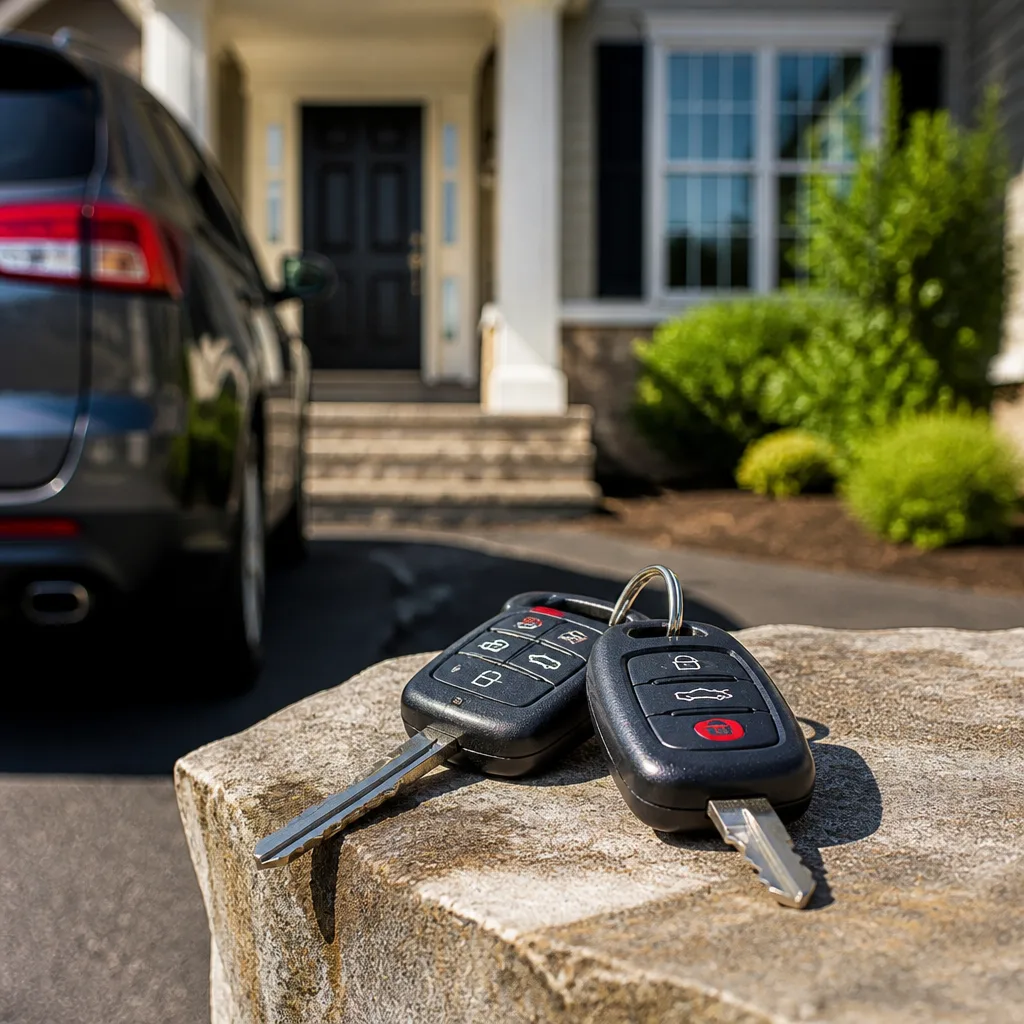 Car keys & fobs
Non-destructive entry first, always - and we re-key Schlage, Kwikset, and Baldwin locks on the spot while you watch
You get a price before we start. It does not change when we arrive. No surprises.
Get your free estimateCar Key Replacement Maintenance Checklist for Portland Homeowners
Most Portland drivers don’t think about their car key until it stops working. That’s the problem. A key is a mechanical and electronic device that lives in your pocket, gets dropped on wet pavement, sits in damp entryway trays from October through May, and cycles through thousands of ignition turns. And here’s what we’ve learned after more than a decade cutting and programming keys in Portland: the overwhelming majority of failures that strand drivers at a Fred Meyer parking lot or along I-84 showed clear warning signs for weeks beforehand. A transponder that hesitates. A fob that needs a firmer press. A blade with visible wear at the cuts. This guide gives you a concrete, itemized maintenance checklist so you catch degradation before it becomes a $200 emergency call instead of a $90 planned replacement. If you own a car built after 1996, this applies to you.
Quick Answer
Car Key Replacement in Portland doesn’t have to be a crisis. Inspect your key blade and fob housing every three months, replace fob batteries when voltage drops below 3.0 volts, test your spare key monthly, and watch for transponder hesitation at ignition. If you see cuts worn smooth, cracks forming at the key ring hole, or need two attempts to start, call a Portland locksmith for a replacement before the key fails completely. A planned replacement costs half of an emergency call-out.
Styles & brands we work with
Table of Contents
- The Quarterly Car Key Inspection Checklist
- How Portland’s Wet Climate Accelerates Key Failure
- Blade Wear Patterns: What to Look For
- Fob Battery Voltage Thresholds and Replacement Timing
- Transponder Pairing Symptoms That Precede Failure
- Dealer vs. Big-Box vs. Locksmith: Why Price and Lead Time Vary
- How to Store a Backup Key So It Stays Functional
- Common Mistakes to Avoid
- When to Call a Professional
- Frequently Asked Questions
The Quarterly Car Key Inspection Checklist
Set a recurring calendar reminder. Every three months, take your key out of your pocket and actually look at it. This takes four minutes and catches most failures before they strand you. In our experience at the bench, Portland drivers who do this quarterly check replace keys on their schedule. Drivers who don’t replace them on the key’s schedule, which usually means a rainy night in a parking garage.
- Examine the blade under direct light. Hold the key at an angle. The cuts should have crisp, defined shoulders. If the valleys look rounded, the blade has worn down enough that the ignition wafers or pins may not lift correctly. This is the most common precursor to a key that turns halfway and jams.
- Check the shoulder stop. The shoulder is the flat section where the blade meets the plastic head. If it’s bent, gouged, or mushroomed from being used as a pry tool or bottle opener, the key sits too deep or too shallow in the ignition cylinder. That misalignment wears the cylinder itself, which is a much more expensive repair.
- Inspect the plastic housing around the key ring hole. Look for hairline cracks radiating from the hole. This is where stress concentrates when you pull the key off a ring or when a heavy keychain swings against the steering column. A crack here will eventually split the head entirely, and you’ll be holding a blade with no way to turn it.
- Test the button response on the fob. Stand ten feet from the car and press lock, unlock, and panic. If any button needs a double press or a harder press to register, the battery is fading or the microswitch under the rubber is failing. Both are fixable now and disabling later.
- Run the spare key test. Once a month, use your backup to start the car. Not just unlock the door. Start the engine. A spare that opens the door but won’t turn the ignition is a spare that failed silently, often because it was never programmed correctly in the first place or because its transponder chip degraded in storage.
- Count your keys. Know how many functioning keys you have. If you’re down to one, you’re one loss away from a tow or a dealership bill. Getting a second key cut and programmed while you still have one working key is significantly cheaper than originating a key from scratch when none exist.
If you work with Northfield Lock & Key, we’re happy to run this inspection on-site during any car key replacement appointment. But you can do the visual checks yourself with no tools and no experience. The goal is catching wear before it catches you.
How Portland’s Wet Climate Accelerates Key Failure
Portland’s climate is unusually hard on car keys, and most national maintenance advice doesn’t account for it. From late October through early May, the city sits in a persistent humidity band, often above 80 percent relative humidity for weeks at a time. Combined with salt-free but constant moisture, this creates conditions that degrade key fob seals and microswitches faster than the national average.
Here’s the mechanism. Most key fobs are sealed with a rubber or silicone gasket that sits in a groove around the housing seam. That gasket is rated for occasional moisture exposure, not sustained dampness. In Portland, a key spends months cycling between a warm pocket (body heat drives moisture into the housing) and cool damp air (moisture condenses inside). Over two or three winters, the gasket compresses, the adhesive holding the rubber button membrane weakens, and moisture reaches the circuit board. The first symptom is usually a button that works intermittently. The second is corrosion on the battery contacts. The third is a dead fob on a wet morning in February.
We see the same pattern with blade corrosion. High-humidity air accelerates oxidation on brass and nickel-plated keys, especially if the key sits in a damp entryway tray or gets clipped to a belt during a run in Forest Park. The oxidation itself rarely stops a key from turning, but it roughens the blade surface, which accelerates mechanical wear inside the cylinder. A key that looks okay but feels gritty when inserted is telling you something.
What this means practically: Portland drivers should inspect seals more often than the quarterly baseline. If your key lives in a pocket during a rainy season, check the rubber button membrane every month for cracking or lifting at the edges. And avoid storing your spare in an unheated garage or basement. The temperature swings in a Portland garage make condensation worse than a stable indoor closet.
Blade Wear Patterns: What to Look For
Key blades fail in predictable ways, and each failure pattern tells you something different about how the key is being used. Learning to read the wear is the difference between replacing a $4 blank before it damages your ignition and calling an emergency locksmith after it breaks off in the cylinder.
- Rounded valley floors: This is the most common wear pattern on keys that are more than eight years old. The valleys (the cuts that correspond to the cylinder pins or wafers) should have flat or slightly curved floors with defined edges. When those edges round off, the key doesn’t lift the pins to the exact shear line, and the cylinder has to be jiggled. On some cars, a partially worn key will cause the ignition to feel sticky or the door lock to require a wiggle.
- Polished high spots: Look for shiny, mirror-like patches on the blade. These are the contact points where the cylinder wafers ride along the key. A light polish is normal. A deep groove or a visible channel worn into the brass is not. That channel means the key is losing material and the cylinder is working harder to compensate.
- Shoulder deformation: The shoulder of the key (the squared-off section that stops the key at the correct insertion depth) should be crisp and square. If it’s rounded, dented, or mushroomed, the key is being used as a tool, most commonly as a box opener or a flathead screwdriver substitute. Stop doing that. A deformed shoulder changes how deep the key sits in the cylinder, which misaligns every cut on the blade.
- Twist or bend: Hold the key at eye level and look down its length. A straight blade should look perfectly flat. If there’s a slight twist or bow, the key has been stressed, often by turning while partially inserted or by sitting under a heavy item in a bag. A twisted key will continue to deform with use and eventually snap.
- Corrosion pitting: On older brass keys, look for tiny dark specks or rough patches that don’t polish out. These are corrosion pits from years of moisture exposure. They reduce the blade’s cross-sectional strength and, more importantly, create friction inside the cylinder that accelerates cylinder wear.
If you see any of these patterns on a key you use daily, get a fresh blade cut while the original still works. A duplicate cut from a working key is a five-minute job at a proper locksmith bench. Cutting a key from a broken extraction or a worn-to-failure original costs more and risks the cylinder. The economics are simple: replace early, pay less.
Fob Battery Voltage Thresholds and Replacement Timing
Fob batteries don’t fail like flashlight batteries. A flashlight dims gradually over days. A key fob battery holds near full voltage for most of its life, then drops off a cliff in the final few weeks. That’s why so many drivers are surprised: the fob worked fine yesterday, and today it’s dead. The voltage curve on a CR2032 or CR2025 lithium cell is not linear.
A fresh coin cell reads about 3.3 volts. At 3.0 volts, it’s at roughly 60 percent of its useful life. At 2.9 volts, most fobs will still operate but with reduced range and slower response. At 2.7 volts, the fob becomes intermittent. At 2.5 volts, it’s effectively dead. The usable window between “starting to fade” and “dead” is often less than a month.
The practical rule: if you’ve owned the key for more than two years and the fob starts needing a second press, replace the battery now, not later. A CR2032 costs six dollars at any Portland hardware store. The same replacement done as part of an emergency call-out costs considerably more because you’re paying for dispatch time, not parts.
One caution specific to modern smart keys and proximity fobs: some vehicles use soldered rechargeable cells rather than user-replaceable coin cells. If your fob is a sealed unit with no visible battery door, do not pry it open. That requires bench work. We regularly see fobs that were broken open with a flathead screwdriver, destroying the case and sometimes the circuit board, because the owner assumed there was a replaceable battery inside. If there’s no obvious coin cell slot, there isn’t one, and the replacement is a service job, not a DIY job.
Also note: several late-model vehicles, particularly European makes, require the fob to be re-synced after a battery change, and some will not start if the fob’s rolling code counter was interrupted. If your car doesn’t recognize the fob after a battery swap, don’t keep pressing buttons. That can advance the code counter past the vehicle’s acceptable window. Bring it to a locksmith who has the diagnostic tool to resynchronize the key.
Transponder Pairing Symptoms That Precede Failure
If your car was built after 1996, it almost certainly has a transponder chip embedded in the key. That chip is a passive RFID device. It doesn’t need a battery. It responds to a signal from the ignition antenna ring when you turn the key, and the car’s immobilizer validates the chip’s unique code before allowing the engine to start. When the chip or the pairing fails, the engine usually cranks but won’t fire. The key turns, the dashboard lights up, and nothing happens.
Here’s what most Portland drivers don’t know: transponder failure often announces itself weeks before the car refuses to start. The symptoms are subtle, but they’re recognizable once you know what to look for.
- Intermittent start hesitation: You turn the key, the engine cranks for a second or two longer than normal, then fires. This happens when the immobilizer takes extra time to authenticate the chip. It’s intermittent at first, then becomes consistent, then becomes a no-start.
- The security light behaves oddly: Most vehicles have a security indicator, often shaped like a key or a padlock, on the dash. If it flickers, stays lit longer than usual, or blinks in a pattern you haven’t seen before, the car is signaling an immobilizer read error. Your owner’s manual will describe the normal behavior. Anything else is a warning.
- Second key works every time: This is the cleanest diagnostic. If your primary key starts failing and your spare starts the car perfectly on first turn, the problem is the key’s chip, not the car’s immobilizer system. Get the failing key examined before it dies completely.
- Proximity issues on smart keys: Push-button start systems rely on a proximity fob that the car detects inside the cabin. If you find yourself moving the fob closer to the start button, placing it in a specific cupholder slot, or holding it against the steering column to get the car to start, the fob’s internal antenna or chip is failing. This will worsen.
The reason to care about these symptoms: when a transponder key dies completely, the replacement requires originating a new key from the vehicle’s immobilizer system, which requires a locksmith with the right programming hardware or a dealership appointment. When you catch the symptom early and have a duplicate made from a still-functioning key, the process is faster and cheaper. That’s the entire logic of this maintenance approach.
Dealer vs. Big-Box vs. Locksmith: Why Price and Lead Time Vary
When the time comes to replace a car key, Portland drivers have three broad options, and the price spread between them is wider than most people expect. For Car Key Replacement Troubleshooting: Common Problems and How to Fix Them, see our dedicated guide. Understanding why helps you make a rational decision instead of a panicked one.
The dealership. Dealerships have the manufacturer’s programming tools and can order keys by VIN. The advantage is certainty, particularly for very new vehicles where the immobilizer protocol hasn’t been released to aftermarket tools yet. The disadvantage is price and time. A dealer key for a modern vehicle with a proximity fob typically runs $250 to $450, and the process often requires two appointments: one to order and cut the key, another to program it. Some Portland dealerships quote a week or more for key orders. You also need to get the car to the dealership, which means a tow if the key is already dead.
The big-box store. Hardware stores and home centers now offer car key copying services, but they’re limited in ways that matter. Most of these machines can duplicate a basic transponder key if they stock the right blank and if their automated cloner recognizes the chip protocol. They cannot originate a key when none exists. They cannot cut high-security side-milled keys. They cannot program proximity fobs or smart keys. For older vehicles with simple transponder chips, a big-box copy can work, but the failure rate is high enough that we regularly see drivers who paid for a big-box key that starts the car once and then won’t authenticate again. If the key doesn’t work, you’re back to square one, with no recourse.
A locksmith. This is the middle path, and in Portland it’s usually the most economical one for most drivers. A properly equipped locksmith can cut and program transponder keys, proximity fobs, and many smart keys on-site, at your location, without a tow. The price typically falls between $90 and $180 for a standard transponder key and higher for proximity or smart keys, but that includes programming. Lead time is measured in minutes, not days. The key variable is whether the locksmith has the right equipment for your vehicle’s protocol. Not every locksmith carries diagnostic tools for every make. Northfield Lock & Key handles car key replacement as a core service, not an add-on, and we tell you on the phone whether your vehicle is one we can program before we dispatch anyone. For help Choosing the Right Locksmith Brand: A Buyer’s Guide for Portland, read our comparison.
One more consideration: some modern vehicle keys, particularly side-milled laser-cut keys used on many European and newer domestic models, cannot be duplicated by the automated machines at hardware stores at all. The keyway geometry and the chip protocol require a high-security cutting machine and brand-specific software. If you drive one of these vehicles, your realistic options are a locksmith or a dealer, and the locksmith will almost always be faster and cheaper.
How to Store a Backup Key So It Stays Functional
A backup key only helps if it works when you need it. This sounds obvious, but the way most people store spare keys guarantees that they’ll fail at exactly the wrong moment. We’ve seen too many Portland drivers pull a spare key out of the glove box, insert it into the ignition, and discover that it was never programmed in the first place, or that its battery died six months ago, or that the chip was damaged by heat cycling.
Here are the storage rules that keep a backup key functional.
- Store the spare indoor, in a stable environment. A bedroom drawer, a home office desk, or a dedicated key cabinet all work. Avoid unheated garages, basements, and definitely avoid the glove box. The glove box is the worst possible place: it’s the first place a thief checks, and it subjects the key to temperature swings from below freezing on winter mornings to above 120 degrees on summer afternoons in a parked car. Those cycles degrade coin cell batteries and can crack the solder joints on transponder chips.
- Keep the spare on its own ring, or no ring at all. A key that sits buried under a pile of other keys in a drawer is fine. A key that hangs on a hook with a heavy keychain attached is not. Weight on the key ring hole stresses the housing and can crack the head over months of hanging. If you use a hook, hang the key alone.
- Test the spare monthly. Once a month, take the spare out and start the car with it. Not just unlock the door. Start the engine. Let it run for ten seconds. Then switch back to your daily key. This confirms the spare works and cycles the fob’s electronics, which prevents the contacts from corroding in place. A fob battery that sits unused for two years is more likely to be dead than one that gets regular use.
- Label the spare. If multiple drivers share a house with multiple cars, a key ring full of unlabeled fobs is a slow-motion disaster. A label maker or a simple tag with the car’s make and year prevents the 6 AM confusion of trying four keys before finding the right one. This is a small thing that avoids genuine frustration.
- Keep the spare away from magnets and EMF sources. This is probably overcaution for most keys, but inductive chargers, strong refrigerator magnets, and some household electronics generate fields that can theoretically interfere with passive RFID chips over long exposure. The risk is low, but the precaution costs nothing: store the key on the other side of the room from your wireless charging pad.
If you’ve lost your only key and don’t have a spare, the economics change. Originating a key from scratch costs more because the locksmith needs to read the vehicle’s immobilizer system without a working key as a template. That’s a good argument for getting a spare cut while you still have one functioning key. In Portland, a duplicate cut from an existing key is one of the most cost-effective security investments you can make.
Common Mistakes to Avoid
- Ignoring the slow degradation. A key that needs a wiggle or a fob that needs a second press is not a quirk. It’s a warning. Every week you ignore it is a week closer to a complete failure, and the failure will happen when you’re already running late.
- Trying to repair a cracked key head with superglue. We see this constantly. A crack forms at the key ring hole, the owner glues it, and it holds for a few weeks before splitting completely. A glued key head is not a repair. It’s a delay. The glue also bonds to the transponder chip in some key designs, which makes professional repair or replacement harder.
- Keeping the spare in the car. The glove box, the center console, under the seat. This defeats the entire purpose of a spare. If you lock yourself out, the spare is inside the locked car. If the car is stolen, the thief gets a spare key. This is one of the most common security mistakes we encounter in Portland’s denser neighborhoods.
- Using the key as a tool. Opening boxes, prying plastic covers, cleaning under fingernails. A key is not a multitool. Every pry bends the blade slightly, and accumulation of those bends eventually snaps the key inside the ignition cylinder, which turns a $90 replacement into a $200 extraction job.
- Waiting until the key is lost to think about replacement. The most expensive key is the one you need replaced at 11 PM, from a parking lot, with no spare. Originating a key from scratch costs two to three times as much as cutting a duplicate from a working original. The maintenance mindset saves real money.
- Assuming all keys can be copied at a hardware store. Side-milled laser-cut keys, smart keys, and proximity fobs cannot be duplicated by automated kiosk machines. If you drive a late-model European car, an Acura, an Infiniti, or any vehicle with push-button start, a hardware store copy is not an option. You need a locksmith with the right cutting and programming equipment.
When to Call a Professional
Some key issues are check-list items you can handle yourself. Some are not. If your key is cracked at the head, worn to the point of visible rounding, or already damaged, do not continue using it. Every use worsens the damage and risks breaking the blade inside the cylinder. If your fob casing is split, exposing the circuit board to Portland’s damp air, that’s a replacement now, not later. If your vehicle requires a side-milled or laser-cut key, a DIY copy is not an option. If your car cranks but won’t start and you’ve ruled out the battery, you may have a transponder failure that requires diagnostic equipment to resolve. Northfield Lock & Key offers free estimates in Portland. Call (855) 341-3373 and describe your vehicle and your key issue. We’ll tell you on the phone whether it’s a same-day job, what it’ll cost, and whether you need to meet us at the bench or have us come to you.
Frequently Asked Questions
Look for three specific signs: the blade has visibly rounded cuts or polished grooves, the fob needs a second press to register, or the ignition hesitates when you turn the key. Any of these means the key is degrading. In our experience, a key that shows one of these signs typically has weeks to months of life left, which is the window for a planned, cheaper replacement.
Yes. Most transponder keys and many proximity fobs can be cut and programmed at your location, whether you’re at home in Southeast Portland or parked near Providence Park. The key variable is whether the locksmith’s mobile equipment supports your vehicle’s specific protocol. Call before dispatch and a good locksmith will confirm compatibility over the phone.
For a standard transponder key, expect $90 to $180 including cutting and programming. Proximity fobs and smart keys run higher, often $180 to $350 depending on the vehicle. Dealership pricing is typically $250 to $450 for the same job. The price you’re quoted on the phone is the price you pay, and there’s no surcharge added when the locksmith arrives.
Your spare key was either cut but never programmed with a transponder chip, or its chip has failed. A key that opens the door proves the mechanical cut is correct, but the ignition requires the chip. If the spare was cut at a big-box store as a basic metal key, it may not have a chip at all. A qualified locksmith can test the key and tell you whether it can be programmed or needs replacement.
No difference in function when both are done correctly. The physical blade and the transponder chip are the same parts, sourced from the same manufacturers. The difference is price, speed, and convenience. A locksmith typically charges half what a dealership charges and completes the work on-site instead of requiring a tow and two appointments.
If your fob has a visible battery door, yes. Use a CR2032 or CR2025 coin cell, matching the existing battery exactly. Replace it within five minutes of removing the old one to preserve the volatile memory on some fobs. If the fob is a sealed unit with no visible battery door, do not pry it open. That’s a bench job. Northfield Lock & Key can replace internal batteries on sealed fobs without damaging the case.
The Bottom Line
Your car key is a wear item, not a permanent fixture. It has moving parts, an electronic chip, and a finite lifespan, and in Portland’s damp climate, that lifespan is shorter than you’d expect. The fix is maintenance, not luck. Inspect the blade every quarter. Test the fob monthly. Replace the battery at the first sign of button hesitation. Keep a functioning spare in a stable indoor environment. And when the time comes to replace the key, do it while the old one still works. The key takeaway: planned replacement costs half of emergency replacement, and that margin is entirely within your control.
If you need a key cut, a transponder programmed, or a second opinion on a key that’s acting up, call Northfield Lock & Key at (855) 341-3373. We’ll give you an honest answer and a flat quote before anyone gets in the truck. Explore our Northfield Lock & Key home page, or the specific pages for rekeying locks and emergency work linked in this guide.
Written by the team at Northfield Lock & Key, serving Portland since 2012. Explore more guides & resources on our blog.